Electricity is something every person in Pakistan uses every day. We need it for lights, fans, refrigerators, mobiles, and many other things. But many people do not clearly understand how much 1 unit of electricity costs. This article explains the price of one unit in very simple English.
What Is 1 Unit of Electricity?
1 unit of electricity means 1 kilowatt-hour (kWh).
This means:
- If you use a 1000-watt machine for 1 hour, you use 1 unit.
- If you use a 100-watt bulb for 10 hours, that also becomes 1 unit.
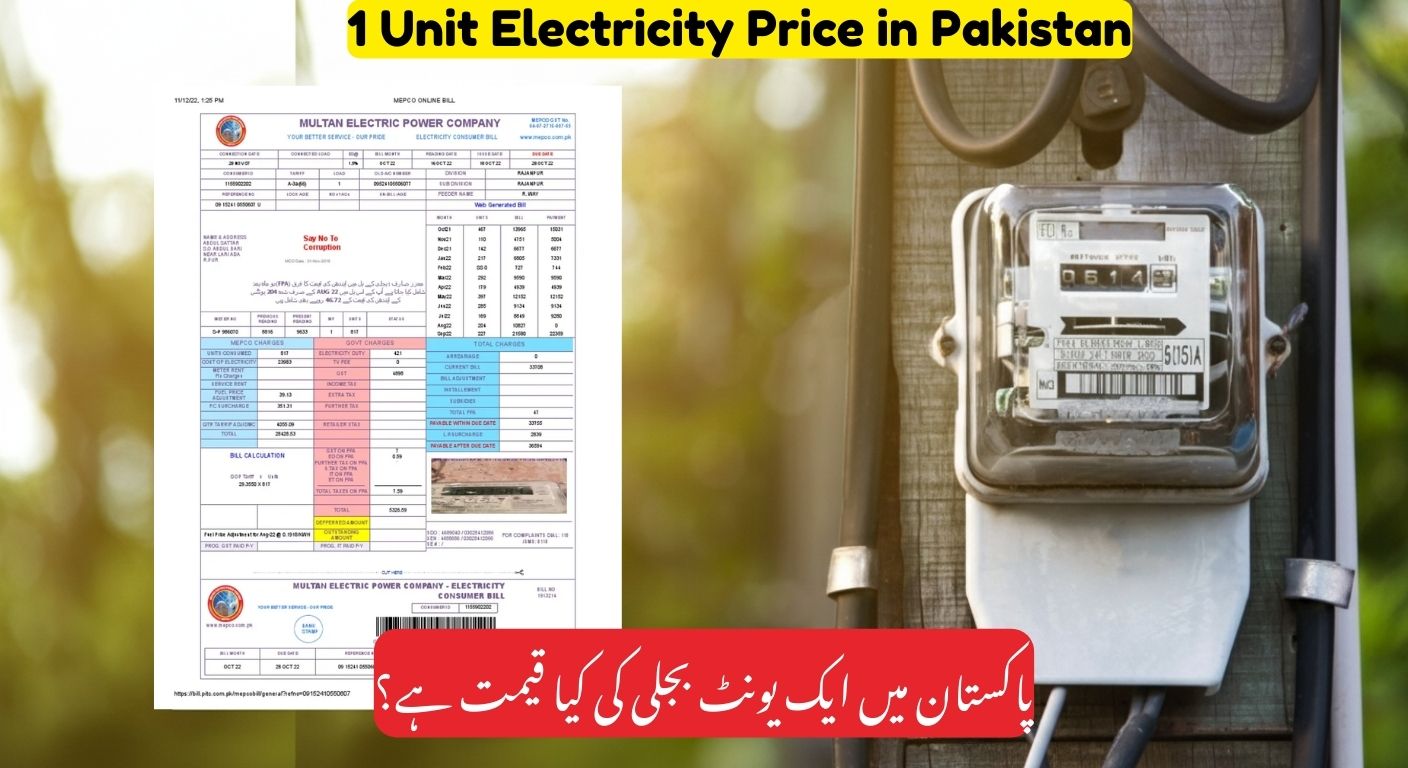
Your electricity bill shows how many units you used in one month.
Current Price of 1 Unit (2025)
In 2025, NEPRA (the electricity authority) reduced the base price of electricity. The new base rate is:
➡️ Around Rs 34 per unit
This is the basic price. The previous rate was higher, so this is some relief for people. After government adjustments and subsidies, many users pay around:
➡️ About Rs 31–32 per unit
This depends on the type of consumer and how many units they use.
Different Prices for Different Users
Electricity rates are not the same for everyone. They change based on how many units a home uses in one month.
1. Protected Users (Use up to 200 units)
These are low-usage homes. Their rates are cheaper.
- 1 to 100 units → Rs 10.54 per unit
- 101 to 200 units → Rs 13.01 per unit
These people get the biggest relief.
2. Non-Protected Users (Use more than 200 units)
Their rates are higher.
- 1 to 100 units → Rs 22.44 per unit
- 101 to 200 units → Rs 28.91 per unit
- More units → Higher rates
In other words, as your electricity usage increases, the cost rises as well.
Why Did Electricity Price Come Down?
There are three main reasons:
1. Lower Capacity Payments
The government pays power plants even if electricity is not used. These payments were reduced, so the electricity price also dropped.
2. Government Relief Plan
The government wanted a “uniform tariff.”
This means: people in different cities should pay almost the same price.
So, many consumers now pay less.
3. NEPRA Decision
NEPRA checked fuel prices and other costs.
Because global fuel prices became lower, they reduced the base tariff.
How Does This Affect You?
Better for Home Users
People who use fewer units (100–200) will see a smaller bill.
Help for Low-Income Families
Electricity is a big monthly cost for poor families. Lower per-unit prices help them save money.
Industries Also Benefit
Industries use a lot of power. Lower prices reduce their production costs, which can help the economy.
Extra Charges Still Apply
Even if the base rate is Rs 34, your final bill may be higher because of:
- Fuel Price Adjustment (FPA)
- Taxes and duties
- Peak and off-peak rates (for TOU meters)
So the total bill depends on more than just the unit price.
Conclusion
In simple words:
- 1 unit = around Rs 34 (base rate)
- Many users pay around Rs 31–32 after adjustments
- Low-unit users get cheaper rates
- High-unit users pay more
- Government and NEPRA reduced the price to help people
Understanding the price of one unit helps you manage your electricity usage and control your monthly bill.