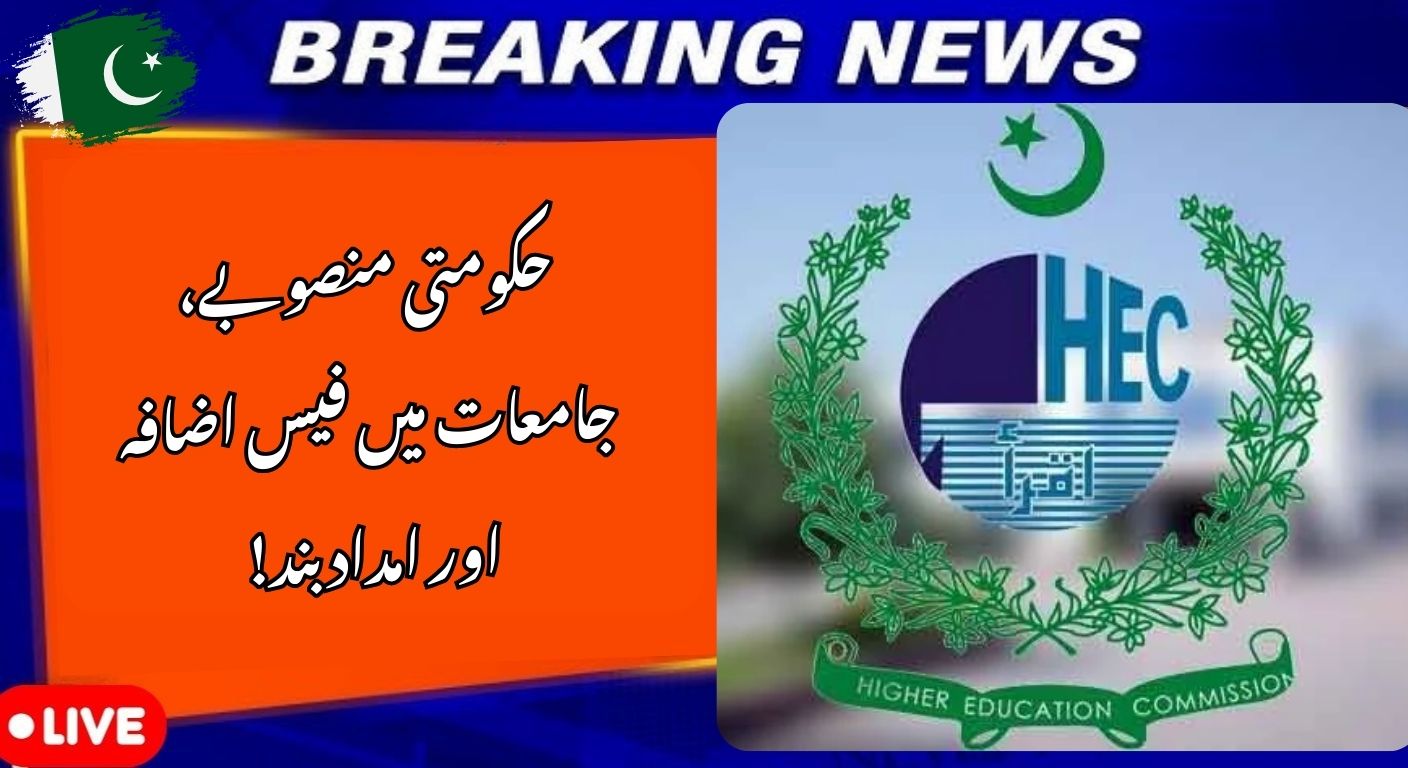
The Higher Education Commission (HEC) has cautioned that many universities in Pakistan are entering a serious financial crisis. For several years, they have received the same amount of funding from the federal government, even though the number of students and staff has increased. This lack of financial growth is making it hard for universities to manage their daily needs.
According to a written statement shared in the National Assembly, the Ministry of Education explained that recurring funds for universities have not increased since 2018–19. During this long period, universities have admitted thousands of new students and hired more teachers and staff, but their budgets have remained frozen.
HEC said that this situation is creating many challenges. If funding does not improve soon, universities may have no choice but to increase tuition fees. Higher fees will make it difficult for many students—especially those from lower-income families—to continue their studies. HEC also warned that fee hikes might reduce enrolment, pushing more students away from higher education.
Scholarships Affected After 35% Budget Cut
HEC also revealed that there has been a 35% cut in the development budget. The amount has dropped from Rs. 61.1 billion in 2024–25 to Rs. 39.5 billion in 2025–26. Because of this reduction, many scholarship programs have already been affected, which means fewer deserving students will receive financial support.
Education Minister Dr. Khalid Maqbool Siddiqui shared that Pakistan currently has 27 foreign scholarship programs in partnership with international universities. These programs help students study abroad from bachelor’s degrees to postdoctoral levels. But with shrinking budgets, maintaining these opportunities is becoming more difficult.
Some economic experts believe that the government is giving more importance to visible development projects—such as roads and infrastructure—instead of focusing on education and healthcare. They warn that this approach might create long-term problems for the country.
Population Growing Faster Than Literacy
Another concern raised in the National Assembly was the gap between population growth and literacy improvement. The minister explained that Pakistan’s population reached 241.49 million in the 2023 census, growing at an annual rate of 2.55% between 2017 and 2023.
However, the literacy rate improved only from 58.9% to 60.7% in the same period, which is just a 1.8% increase. This slow progress shows that the country is struggling to educate its people fast enough to keep up with its growing population.
The Ministry of Education is trying to close this gap by focusing more on non-formal education programs. These programs especially target out-of-school children and marginalised communities.
New HEC Leadership Expected Soon
Currently, HEC is being run under temporary leadership, but this situation is expected to change soon. The selection process for a permanent executive director is almost complete. Prof Dr Ziaul Haq, Vice Chancellor of Khyber Medical University, has been chosen for the position and is expected to take charge in the coming days.
For the position of HEC Chairman, interviews will soon begin. A search committee and the education ministry have shortlisted around 30 candidates, and they will be interviewed next week.