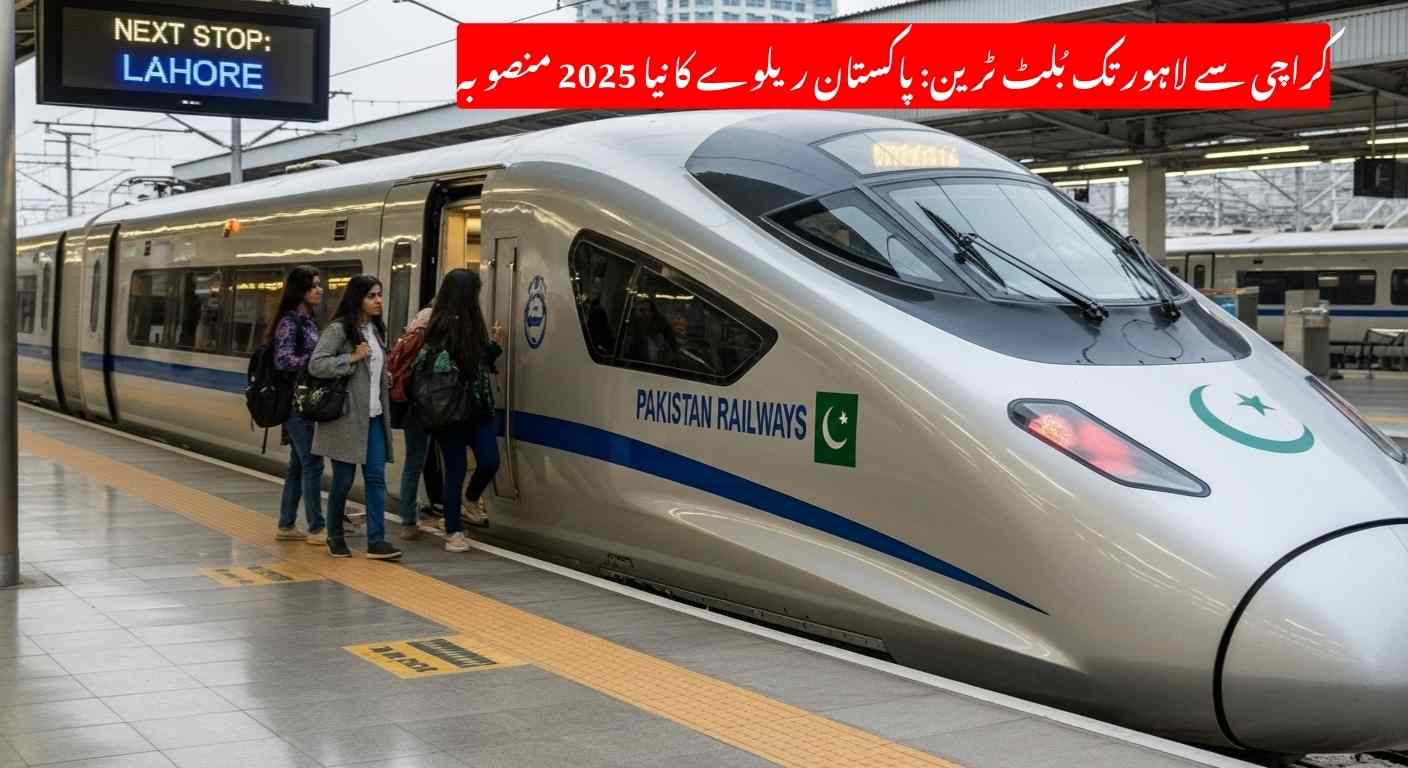
Pakistan Railways has introduced a groundbreaking plan to launch a high-speed bullet train between Karachi and Lahore, aiming to cut the current 20-hour travel time to only five hours by 2030. This marks one of the most significant upgrades ever proposed for the national railway system.
The project falls under the ML-1 railway modernization, a massive $6.8 billion initiative being developed with the cooperation of China through CPEC. The new railway track—stretching 1,215 kilometers—will support speeds of up to 250 km/h and will include major stops in Hyderabad, Multan, and Sahiwal.
Railways Minister Hanif Abbasi termed the bullet train initiative a “historic breakthrough” that will redefine travel, commerce, and connectivity between Pakistan’s two largest cities. He highlighted China’s essential contribution, particularly the involvement of the China Railway Construction Corporation, which will provide modern technology, upgraded bridges, and state-of-the-art signalling systems to support the project.
Economic and National Impact
The new high-speed train corridor is expected to bring several long-term advantages, such as:
- Opening up thousands of direct and indirect employment opportunities
- Strengthening trade and business activity between major urban centers
- Increasing Pakistan Railways’ freight share from 4% to nearly 20% by 2030
- Reducing pressure on road transport and lowering the country’s fuel import expenses
The quicker travel time will improve passenger convenience while making the movement of goods faster, cheaper, and more reliable.
Other High-Speed Rail Projects in Progress
Apart from the Karachi–Lahore bullet train, the Punjab government has also approved a high-speed rail link between Lahore and Rawalpindi, which is expected to reduce travel time to 2.5 hours.
In another major development, the Asian Development Bank (ADB) has come forward to support a $2 billion improvement of the Karachi–Rohri stretch. This 500-km section is vital for transporting copper ore from the upcoming Reko Diq mining project. An ADB-led consortium is likely to finalize the contracts soon.
Digital Transformation of Pakistan Railways
Pakistan Railways is also upgrading its communication and control systems nationwide. New improvements include:
- Modern computerized interlocking systems at major junctions
- A sophisticated microwave-based communication network along the Karachi–Lahore route
- Digital Push-to-Talk systems for clearer and faster communication among railway divisions
These reforms aim to increase safety, minimize delays, and streamline operations across the network.
Conclusion
The Karachi–Lahore bullet train marks a revolutionary leap toward a more advanced and efficient railway system in Pakistan. With upgraded tracks, cutting-edge digital systems, and international collaboration, Pakistan Railways is moving toward a future of rapid travel, stronger economic links, and improved freight movement across the country.