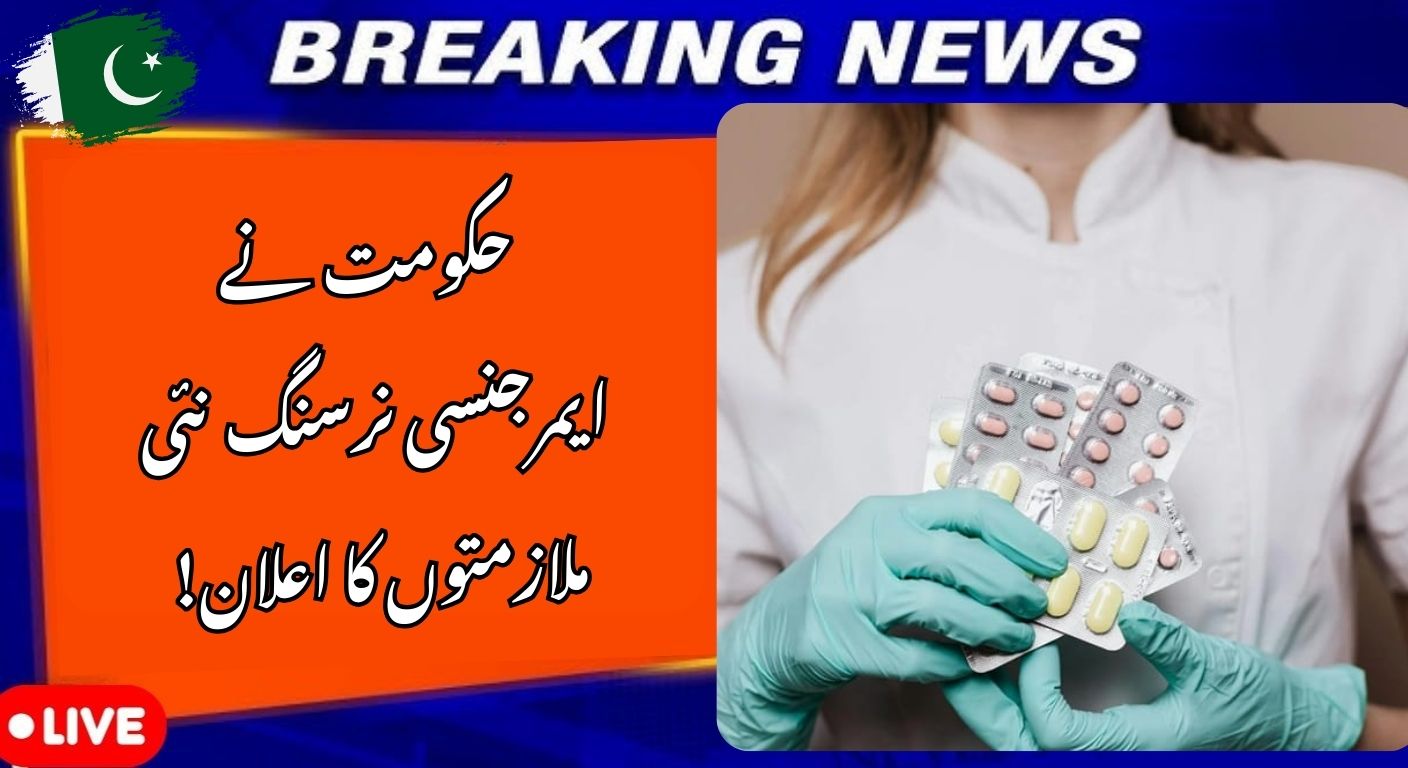
Khyber Pakhtunkhwa (KP) has officially declared a nursing emergency, a significant step taken by Chief Minister Mohammad Sohail Afridi in response to the province’s critical shortage of trained nursing staff. The decision comes at a time when many hospitals are struggling to manage increasing patient loads due to limited human resources.
During a key meeting with senior officials of the health department, the chief minister directed authorities to begin immediate recruitment for hundreds of vacant nursing positions across major hospitals. He instructed that the hiring process be fast-tracked through the Educational Testing and Evaluation Agency (ETEA) to ensure timely appointments. The Nursing Council was also asked to promptly clear 650 pending nursing positions, removing all administrative delays.
Afridi stressed that to improve healthcare services, the hiring process must be based strictly on merit, transparency, and strong supervision, ensuring that qualified professionals are placed where they are needed the most.
Focus on Medical Specialists and Disease Prevention
Beyond nursing shortages, Afridi highlighted the urgent need to accelerate the recruitment of doctors and medical specialists in government hospitals. He emphasized that both general physicians and specialists are essential for delivering improved healthcare in rural and urban areas.
The chief minister also instructed the health department to intensify efforts against major health threats currently affecting KP, including:
- Polio
- Dengue
- Malaria
He urged full implementation of the Dengue Action Plan, calling for better surveillance, preventive steps, and public awareness campaigns. To avoid delays in essential supplies, Afridi ordered that the procurement of medicines and medical equipment begin from January 1 each year.
Plans to Build New Hospitals and Strengthen Oversight
To ease the increasing burden on hospitals in cities like Peshawar, Kohat, and Malakand, the government is evaluating proposals for establishing new multi-bed hospitals. These facilities are expected to reduce patient overload and improve access to quality healthcare.
The chief minister also directed the Healthcare Commission to tighten regulatory monitoring in both public and private health facilities, ensuring that treatment standards remain consistent throughout the province.
Additionally, progress on the construction of the Khyber Institute of Child Health was reviewed. Afridi instructed that the project be completed without delay so that the institute can start providing essential pediatric services as soon as possible.
Updates on KP’s Ongoing Health Development Projects
Officials briefed the chief minister on the province’s development portfolio, noting that 182 health-related projects are part of the Annual Development Programme (ADP). Among them:
- 76 projects are close to completion
- 9 flagship initiatives are actively progressing, including:
- A burns centre in Dera Ismail Khan
- New hospital laboratories
- Developments at the Kohat Institute of Medical Sciences
- Reconstruction of Liaquat Memorial Teaching Hospital, Kohat
- Upgrading and standardizing DHQ Hospital Mardan
In addition, work is advancing on 51 high-priority projects, such as:
- Expansion of emergency and ICU services at Hayatabad Medical Complex
- Establishment of a nursing college in Upper Chitral
- Construction of a paraplegic centre in the merged districts
- Strengthening KP’s EPI immunization programme
Addressing the Healthcare Needs of a Growing Population
The chief minister emphasized that KP’s rapidly increasing population requires swift, effective, and long-term healthcare strategies. He called for continuous monitoring of hospitals, better resource management, and improved administrative systems to meet rising healthcare demands.
Afridi’s declaration of a nursing emergency—and the associated recruitment drive—represents a strong governmental commitment to boosting the province’s healthcare capacity, supporting medical professionals, and safeguarding public health across Khyber Pakhtunkhwa.