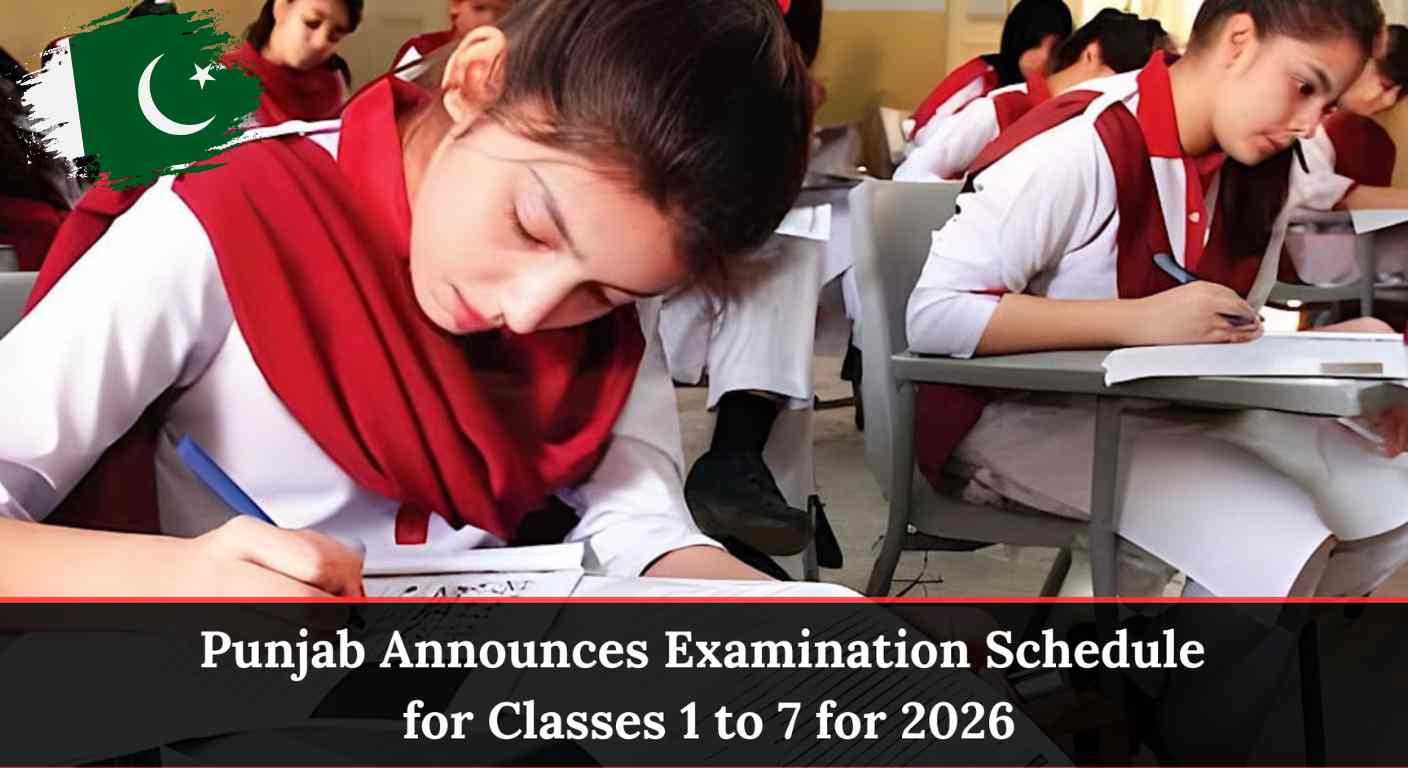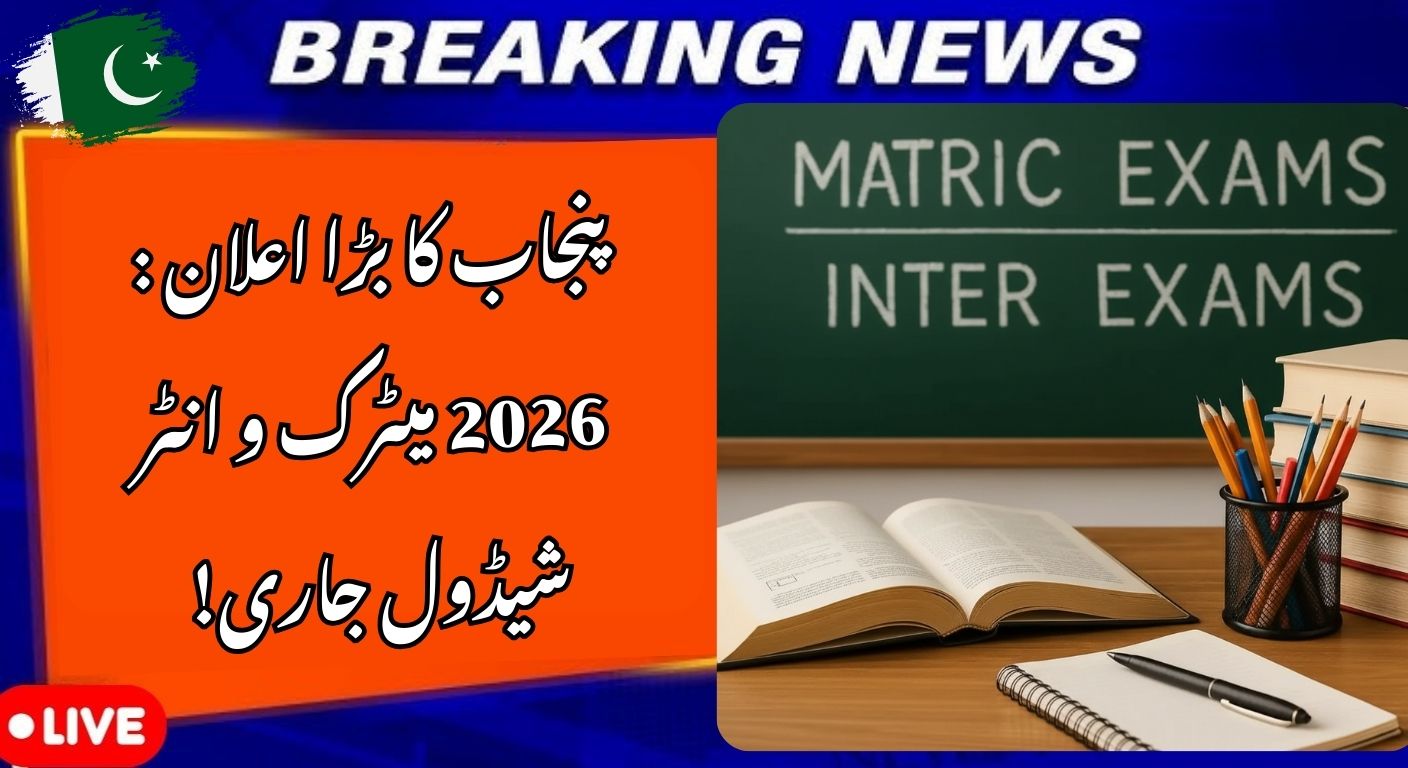
The Punjab Education Department has officially announced the exam schedule for matric and intermediate students for the year 2026. According to the department, matric exams will start on March 3, 2026, while intermediate exams will begin on May 5, 2026. This confirmation brings relief to students and schools who were waiting for the final timetable to begin their preparation properly.
The announcement also signals that the province is trying to organize the academic calendar earlier than usual so students can plan ahead and avoid confusion.
New Admission Policy and Updated School Calendar Approved
The confirmation of exam dates comes after the department approved several major changes for the upcoming academic year. These include:
- A revised admission policy
- An updated school calendar
- Changes in the syllabus for various classes
The department has also finalized plans for printing new textbooks, including 29 completely replaced books for classes six to matric. These books will be printed in December 2025, ensuring they are ready for distribution before the academic session begins.
Officials say this step is part of the broader effort to modernize the curriculum and align it with current educational needs.
New Academic Year Starts April 1 With Free Textbook Distribution
Punjab has also announced the timeline for the new academic year. The 2026 academic session will begin on April 1 across the province. As usual, the government will provide free textbooks, which will be distributed starting April 5.
This distribution plan is designed to ensure that students do not face delays at the start of the school year. Schools will also be given guidelines to make sure the process is smooth and efficient.
Class 8 to Sit for Board-Based Exams From February 3
In another major change, Class 8 students will now take a board-based exam, which will begin on February 3, 2026. This decision reflects Punjab’s shift toward standardized assessments, aiming to create uniformity in student evaluation across the province.
Board-based testing for Class 8 is expected to help teachers identify learning gaps earlier, allowing students to be better prepared for matric exams in the future.
Education Challenges Continue to Grow
Even with new policies and improved planning, Punjab’s education sector is still facing serious challenges. The province is struggling with a high number of out-of-school children, which continues to rise each year.
In 2025, Punjab recorded 28 million out-of-school children, and experts warn that this number may cross 30 million in 2026 if urgent steps are not taken. Rising dropout rates, lack of access to schools in remote areas, and financial difficulties are some of the major reasons behind this growing problem.
Officials say that the government is working on new strategies to encourage enrollment, support low-income families, and improve school facilities. However, many education experts believe that stronger long-term planning and increased funding are needed to control the crisis.
A Year of Major Changes Ahead
With new textbooks, updated policies, early exam announcements, and standardized testing, 2026 is shaping up to be an important year for Punjab’s education system. The government hopes that these steps will help improve learning outcomes and bring more structure to the academic cycle.